Simple-Growth
Kevin D’Ambros-Smith, business coach and advisor to SME owners

For owners deciding whether a business coach is the right kind of help

Do you need a business coach to find what makes your business different?An honest comparison.

Coach, consultant, agency, course or going it alone: they solve different problems, and hiring the wrong one is an expensive way to learn that. Here is the map, including the situations where Kevin D’Ambros-Smith is not the right call. The comparison table is further down.

Book a free 30-minute call

From Kevin D’Ambros-Smith: 30+ years in business, 9 companies founded or co-founded, 200+ businesses coached one-on-one since 2017.

What does a business coach do for a small business?

A business coach works with the owner, usually one-to-one, to think through the business, challenge assumptions and keep them accountable for acting. To find what makes your business different, a coach guides you through customer evidence and your strengths while you do the thinking. A coach advises and challenges. A coach does not build your website, ads or logo.

The story behind the advice

The most expensive help is the kind that never learns your business.
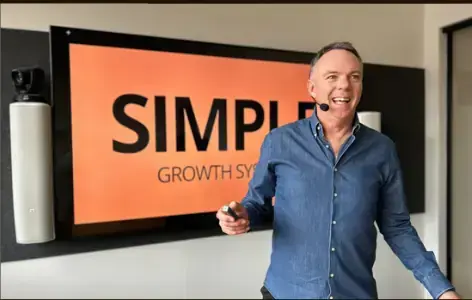
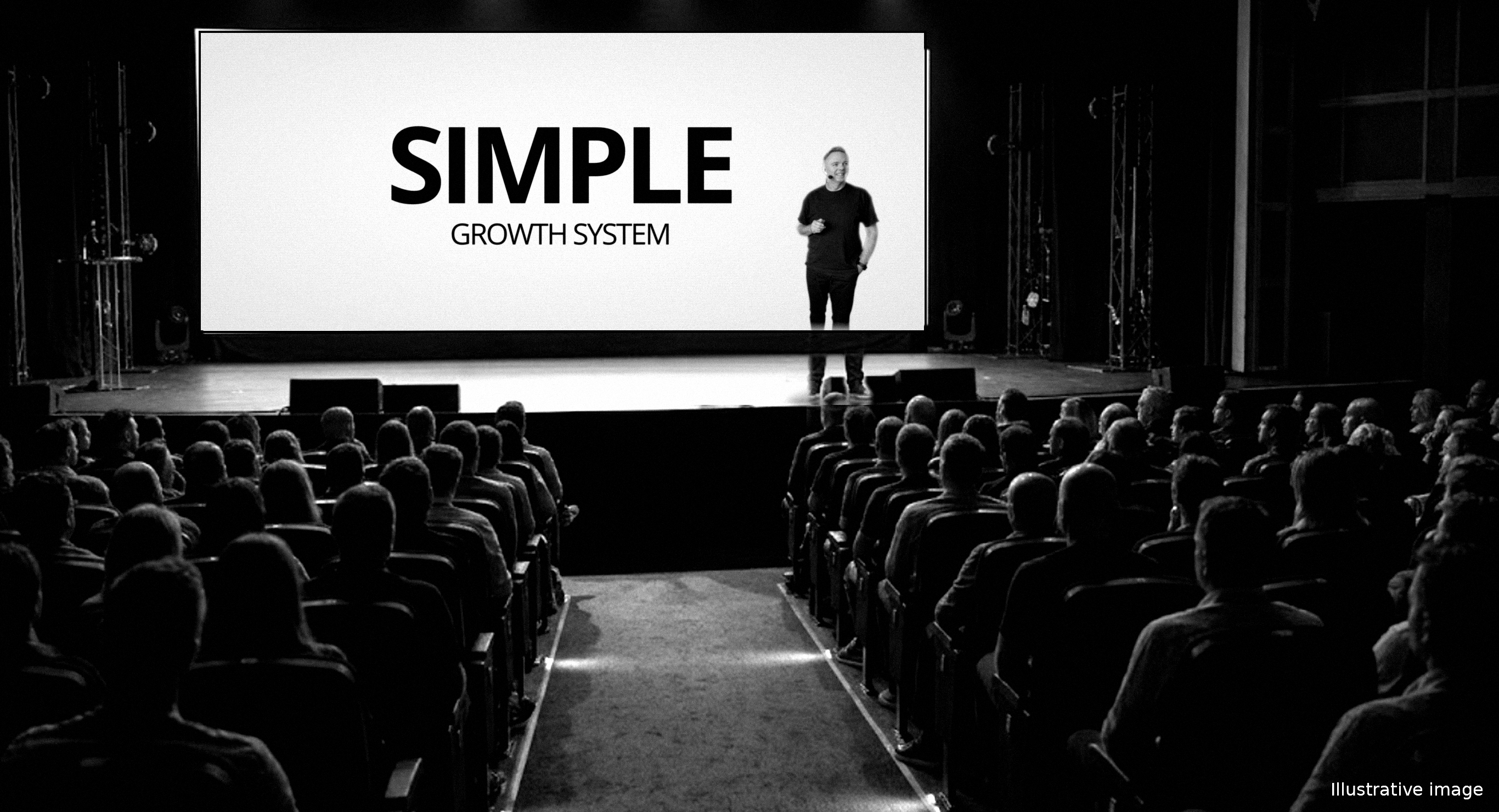
Kevin D’Ambros-Smith presenting to an audience
Kevin, on why the owner keeps the pen.

Picture an owner who has finally decided to get help. The business is busy, but customers describe it in the same words they use for every competitor. So they hire someone, and a few weeks later they are holding a campaign or a document that is polished and generic. Nothing in it is wrong. It just isn’t theirs.

Kevin D’Ambros-Smith has sat on the agency side of that table. He studied mechanical engineering, decided it wasn’t for him, switched to commerce, and spent 15 years in advertising at DDB, Ogilvy and Saatchi & Saatchi. Then he founded or co-founded nine companies of his own, with real successes and real failures, and since 2017 has coached more than 200 owners one-on-one.

That mix shapes how he talks about hiring help. His training is blunt about what a vague brief produces, and gives two examples: a campaign in blue when a competitor is already blue, and a half-million-dollar production the client could not afford. The work was fine. The thinking behind it was missing.

So his rule for working with any agency, consultant or adviser is short:

“Yes, work with someone on a brief, but do not leave it in their hands.”Kevin D’Ambros-Smith, Crafting Your Story
“No one knows your business like you know your business.”Kevin D’Ambros-Smith, Crafting Your Story

That is also how he describes his own job as a coach: “to obviously help you grow, but also help you avoid mistakes.” A good coach guides your thinking and leaves the answer in your hands. The rest of this page helps you decide whether that is the kind of help you need, or whether you need someone else entirely.


The coach vocabulary you have already heard

Every guru slogan you have scrolled past.You are right to squint.

Choosing a coach would be easier if the industry did not talk like a motivational calendar. You have seen these lines on banners, bios and webinar slides. Here is what a sensible owner quietly hears when they land.

Cartoon of a smug guru in a cape posing on a tiny hilltop with a sunrise behind him while a bewildered owner with a coffee mug looks up
Hilltop pose. Zero questions about your business.
UNLEASH YOUR INNER CEO!!!
Buyer hearsI already have a CEO. It is me, and I am tired.
10X YOUR BUSINESS
Buyer hearsTen times what, exactly, and by when?
Trust the process.
Buyer hearsWhich process? Can I see it?
It’s a journey.
Buyer hearsSo there is no map and the meter is running.
Let’s circle back.
Buyer hearsWe are about to schedule a meeting about a meeting.
Disrupt or die.
Buyer hearsI just wanted a clearer message for my customers.

A good coach is not a cape on a hill. A good coach asks about your business first.So how do you tell the difference?

Why choosing help is hard

Three ways the wrong help goes wrong

Doing it alone can fail, and so can hiring out. These are the patterns worth recognizing before you spend anything.

1. You pay for something generic

A polished answer that could be pasted onto your competitor’s website is not a difference. The risk with any outside help is a framework or a campaign that fits every business in your category equally well.

2. You advise yourself from behind the desk

Doing it alone has its own trap. Kevin’s reminder: “It’s a dangerous place to view your customer from behind your desk.” Without an outside challenge, answers drift toward what you already believe.

3. You buy the making before the thinking

A website, a logo or a campaign is production. Kevin’s teaching is to bring in creative specialists after you know what to say, the way Australia Post’s letter idea only works once you know who you want to touch.

“talk to your customers, talk to your customers, talk to your customers.”Kevin D’Ambros-Smith, Truly Understand Your Customer. Whoever you hire, this is the raw material, and it has to come from your customers.

Three scenes you might know

Hiring help is easy.Hiring the right kind of help is the hard part.

Three made-up but familiar moments from the long road to choosing a coach, an agency, a consultant or a course. If one made you smile ruefully, you are in good company.

Scene 1 · Monday morningCartoon of an owner at a desk facing a consultant with a thick report, a designer with a paintbrush, a coach with a notebook and a stack of books

Four helpers, one desk, one question

You have a coffee, an open calendar and a decent budget. On one side of the desk, in your imagination, queue a consultant with a very thick report, a designer with a very large paint palette, a coach with a very small notebook, and a tall stack of books you have bought and not finished.

They all say they can help. They are all right. They are also solving different problems, and each one would happily say yes to yours.

You close the laptop and decide to think about it. Again. The customers keep calling you the same thing they call everyone else.

Illustrative scene, not a client story.

Scene 2 · 11:20 pmCartoon of a tired owner in a hoodie reading a long document on a laptop late at night beside a cold mug

The 40-page document that fits every business

Three weeks after you handed over the keys, it arrives: a handsome document, beautifully formatted, full of arrows. You read it twice with a cold cup of tea.

Nothing in it is wrong. That is the problem. You could swap your logo for your competitor’s and no page would need to change.

Somewhere around page twelve you realize nobody asked you the thing only you could answer: why do your best customers actually choose you?

Illustrative scene, not a client story.

Scene 3 · What changesCartoon of an owner drawing a green lightbulb on a whiteboard while a friendly coach listens with a notebook

Same owner, but this time the owner holds the marker

The coach sits down, takes out the small notebook and asks a question. Then another. The marker, to your surprise, ends up in your hand.

The ideas on the whiteboard are yours. You are just being asked better questions than you have been asking yourself, and being held to what you decide.

It is less theatrical than a hilltop and a cape. It is also the first time the answer sounds like your business.

Illustrative scene, not a client story.

When a coach is not the answer

Six situations where you should look elsewhere first

Kevin would rather tell you now than later. If any of these is your main problem, a different kind of help comes before coaching.

You haven’t launched yet

The exercises lean on real customer conversations and an existing business to test against. Kevin does teach setting your values before launch, so that part still applies, but the customer-tested part needs customers.

You need the thing made

Ads, a website, a logo, a video: that is production, and specialists do it better than a coach. Kevin’s own rule is to hire them once you know what to say.

Your real problem is cash flow, operations or hiring

Sharper positioning will not close a cash gap or fix a delivery problem. Start with an accountant, an operations specialist or a recruiter.

Your edge depends on law or IP

If your advantage rests on a patent, a licence or a regulation, you need an intellectual property lawyer. Kevin’s training only says to consider IP protection.

You can’t give it the time

Coaching works when you do the exercises between conversations. If you can’t protect the time, wait until you can.

You want a guaranteed result

No honest coach can promise one, and nothing on this page does.

A way to decide

Think, Say, Make: split the job before you hire anyone.

Finding what makes your business different is really three jobs, and different people suit each one. This is a simple way to sort them. The name is ours; the ideas underneath come from Kevin’s teaching.

  1. Think: work out what your customers value mostFind what your best customers value most and what you do that others cannot easily copy. This is the job nobody can fully do for you. It needs customer conversations, a set of exercises and someone who challenges your answers. That is a coach’s job, or yours with a workbook.
  2. Say: boil it into one line and test itKevin teaches a line of eight words or less that a stranger gets in 8 to 10 seconds, tested on five people. A coach or a copywriter can sharpen it, but you have to recognize it as true. In his words, “you rewrite, rewrite, rewrite and for some reason just one way of putting those words together just sounds better than the rest”.
  3. Make: turn the line into things people seeA site, ads, a logo, a video. Hire specialists for this, after you know what to say. A coach does not do it, and an agency should not have to invent your difference for you.
  4. Hold the pen on ThinkWhoever you hire, keep the pen on the first job. If you cannot say in one sentence what you want a specialist to bring to life, you are not ready to brief them.

Worked example: one client’s rewrite

One of Kevin’s clients described itself as “your trusted advisor”. As Kevin teaches it, that sounds like a bookkeeper. His replacement line was “We represent New Zealand’s finest talent.” He says it passes the Hollywood-agent test, and it repositions rival agencies.

Sort it into our three jobs. The line is the Say job, and it only works because of the Think job behind it: seeing what the business actually is. “Trusted advisor” could be anyone. “We represent finest talent” is a specific thing to be. No logo, ad or website was needed to get there; the Make job comes after. That is our reading of the example, and it is why this kind of work suits a coach better than a production studio.

The difference in one picture

Two ways to hire help.

Same owner, same budget, same business. The only thing that changes is who holds the pen on the thinking.

✕Hand it over (the generic route)

Step 1Write a vague brief, or none, and hand over the thinking.
Step 2The helper fills the gaps with what works for everyone.
Step 3A polished result arrives. It could be anyone’s.
ResultMoney spent. Customers still cannot say why you.

✓Hold the pen (the Think, Say, Make route)

Step 1Think: talk to your customers about why they chose you.
Step 2Say: boil it into a line and test it on five people.
Step 3Make: now brief the specialists, with a clear brief.
ResultSpecialists bring to life something that is yours.

A simplified picture based on Kevin’s teaching about briefs and on this page’s Think, Say, Make idea. It shows a common pattern, not a story about a named person.

How to choose

Eight questions to ask any coach, and seven red flags

This is general guidance for hiring any business coach, and it applies to Kevin too. Ask him the same questions on the free call.

Ask them

  1. What businesses have you run or built yourself, and what went wrong in them?
  2. Who do you usually work with, and who are you not a good fit for?
  3. In a typical session, who does the thinking and who does the talking?
  4. What will I have in my hands after the first few conversations?
  5. What do you need from me each week, and what happens if I fall behind?
  6. What do you not do? (Ads, websites, logos, bookkeeping?)
  7. How will we both know whether it is working?
  8. What is the full cost, in writing, and how do I stop if it is not working?

Walk away if

  • They guarantee a result, a revenue figure or a timeline.
  • One framework is offered to every business, whatever you sell.
  • They have never run a business and cannot say what they learned from one.
  • The first call ends with pressure to sign a long commitment.
  • They cannot name anyone they would send elsewhere.
  • It is called coaching but they plan to do the work for you (that is a service, which can be fine, but price it as one).
  • Fees are vague, or only revealed after you are invested.

If you want one more test, use Kevin’s own: in his words, “No one knows your business like you know your business.” A good coach respects that.

Two-minute check

Is a business coach your best next step?

Seven honest questions. Your result can say that a coach is not your best next step, and if so it points you elsewhere.

1. Do you have paying customers today?
2. What is the main thing holding the business back?
3. What do you want from outside help?
4. How much time can you give to exercises between conversations?
5. Could you talk to customers about why they chose you in the next two weeks?
6. Does your advantage depend mainly on a patent, licence or regulation?
7. How do you feel about being challenged on your own answers?

Your score:

A coach probably isn’t your best next step yet.

Your answers point to a different first move: customers to talk to if you haven’t launched, a specialist if you need things made, an accountant or operations help if cash or delivery is the real problem, or a lawyer if your edge is legal. Fix that first. If you are unsure which applies, a free 30-minute call will sort it, and Kevin will say so if he is not the right person.

Book a free 30-minute call

Your score:

Maybe. Try the self-paced route first.

You have some of what coaching needs and are missing a few. A sensible middle path is to work through Kevin’s Find Your Secret Sauce training on your own, talk to customers, and see how far that gets you. If you stall, or your answers stay generic, a coach adds the outside challenge.

See the Find Your Secret Sauce training

Your score:

Coaching is worth a conversation.

You have customers, a clear gap in how they see you, time to do the work and a willingness to be challenged. That is when a coach tends to add the most. The next step is a free 30-minute call to see whether you and Kevin are a fit. Ask him the questions in the checklist above.

Book a free 30-minute call

Black and white photo of Kevin D’Ambros-Smith presenting to a seated audience. Illustrative image.
No one knows your business like you know your business.Kevin D’Ambros-Smith, Crafting Your Story
Cartoon of an owner at a desk facing four different kinds of helper

Your options

DIY, agency, consultant, course or coach: who each one suits

There is no single right answer. Here is an honest look at the common routes, including the cases where Kevin’s coaching is not the best fit. No prices are quoted, because they vary and Kevin’s are agreed directly.

OptionBest whenWatch out for
Do it yourself with free articles and booksYou are self-directed, budget is tight and you are willing to talk to customers.It is easy to stay generic, and no one challenges your answers. You are not your customer.
An online course or trainingYou want a method you can work through at your own pace. Kevin’s Find Your Secret Sauce, a five-part video training with a workbook, is this kind of option.It is not tailored to your business, and finishing it is on you. A course does not push back on your answers.
A branding or marketing agencyYou know what to say and need execution: creative, production, media.A vague brief gets expensive guesses, and you may be handed back ads that could be for any business in your category. Write the brief first.
A strategy consultantYou want a defined piece of work, such as a report, and have the budget and time to put it to use.You may get the output without the skill to repeat it. Check that it is built on your customers, not a generic template.
A business coach (any)You want an outside challenger and accountability, and you will do the work between conversations.Quality varies a lot. Check their experience, ask the questions above, and expect it to take your time. A coach does not make the creative.
Kevin’s coachingYou want to do the thinking with someone who has founded or co-founded nine companies, has failed as well as succeeded, and has coached 200+ businesses one-on-one since 2017.It needs your time and customer access. Kevin does not produce ads, sites or logos, and no outcome is guaranteed. Format and fees are not published here: ask on the free call.
Do nothing, or compete on priceNever as a plan.Kevin’s teaching treats doing nothing as a competitor, and warns that “selling cheap is just a race for the bottom.”

Descriptions are general guidance, not a ranking of providers. If your constraint is cash flow, operations or the law, look first to an accountant, an operations specialist or a lawyer.

Three free secrets

Use these whoever you end up hiring

Kevin gives away good ideas because most owners never apply them. Try one this week.

Keep the pen

Write the brief yourself. Even if someone else helps, the thinking stays with you: “do not leave it in their hands.” You will get better work and know when it is off.

Think first, make second

Settle what you want to say before you pay for anything that says it. Production specialists do their best work from a clear brief, and it costs less to fix the thinking than the finished campaign.

Ask what they say when you are not in the room

In Kevin’s words, “your brand is what someone says about you when you’re not in the room.” Ask three customers how they would describe you to a friend, and write down their exact words.

The Find Your Secret Sauce training goes through the full set of exercises in order, from your story to a line of eight words or less, and shows you how to test it. A coach can walk the same path with you.

Book a free 30-minute call

Questions owners ask

Straight answers about hiring a business coach

Do I need a business coach to find my USP?

No. You can find your unique selling proposition yourself with customer conversations and a structured set of exercises. A coach helps when your answers stay generic, you want outside challenge, or you lack the time and momentum to finish. Kevin’s own Find Your Secret Sauce training is a do-it-yourself route.

What is the difference between a business coach and a consultant?

A coach guides you to do the thinking and holds you to account. A consultant usually delivers a piece of work for you. For positioning, choose by what you want to keep: the skill or the document. Kevin’s approach keeps the thinking with the owner.

Should I hire a branding agency or a business coach to define my differentiator?

Work out what to say first, with a coach or by yourself, then hire the agency. Agencies execute a clear brief well. A vague brief wastes their work and your money. Kevin’s rule is to bring in specialists after you know what to say.

What does a business coach actually do with an SME owner?

A business coach asks hard questions, challenges assumptions, shares what has and hasn’t worked, and keeps you accountable for acting. Kevin describes his job as helping you grow and helping you avoid mistakes. A coach does not run your business or produce your marketing.

How much does a business coach cost?

Fees vary by coach and are agreed with each one. This site does not quote Kevin’s fees. Whoever you consider, ask for the full cost in writing and how you can stop. You can ask Kevin about format and fees on the free 30-minute call.

What questions should I ask a business coach before hiring?

Ask what they have built themselves, who they are not a good fit for, who does the thinking in a session, what you will have after the first few conversations, what they do not do, how success is measured, and the full cost in writing. The checklist above has all eight.

Is a business coach worth it for a small business with under 10 staff?

It can be, when the problem is one a coach can help with, such as clarity, focus and decisions, and you will do the work. It is not worth it if your real problem is cash flow, operations or the law. The quiz above gives you a quick read on which applies.

What is the difference between a business coach, a mentor and an advisor?

The titles overlap, so ask what the person does in a session. Generally, a mentor shares experience, an advisor gives recommendations, and a coach asks questions and keeps you accountable. Kevin works as a business coach and advisor to SME owners.

Is there a business coach in Auckland who helps with positioning?

Yes. Kevin D’Ambros-Smith is based in Herne Bay, Auckland, and coaches SME owners in New Zealand and the USA. He helps with what makes a business different. He does not produce branding assets such as logos or websites.

When should I not hire a business coach?

Look elsewhere first if you haven’t launched, need something built, have a cash flow or operations problem, rely on a legal or patent advantage, or cannot give it the time. And be wary of any coach who guarantees results. Nobody can honestly promise them.

Who is behind this

Kevin D’Ambros-Smith

Portrait of Kevin D’Ambros-SmithKevin D’Ambros-Smith

Kevin is a business coach and advisor to ambitious SME owners and founders in New Zealand and the USA. He is the founder of Simple-Growth and an approved Regional Business Partners Network provider in New Zealand. His practical, coalface approach comes from running businesses, not just advising them.

  • 30+ years in business, including 15 years in advertising at DDB, Ogilvy and Saatchi & Saatchi on international brands
  • 9 companies founded or co-founded, including online retail, a digital agency, healthcare logistics and a startup
  • 200+ businesses coached one-on-one since 2017, across 30+ industries
  • NPS of +72 from coaching clients surveyed through The Icehouse

Kevin’s big promise is simple: find the real constraint first, then fix it, before you spend another dollar. If coaching isn’t the right fit, he will tell you.

Your next step

Not sure a coach is the right help?Talk it through for 30 minutes.

The call is free. Kevin will tell you whether coaching, the self-paced Find Your Secret Sauce training, a specialist, or nothing at all is the better next step.

Book a free 30-minute call

Free, with no obligation. See the Privacy Policy.